


Train for Muscle. Eat for Fat Loss.

Challenge Your Body. Change Your Results.
You are eating well. You have cleaned up the simple carbohydrates, flour products, refined sugar, free oils, and alcohol. Your meals are built around green vegetables, fruit, and plenty of quality protein—eggs, fish, chicken, lean beef, shrimp, cottage cheese, Greek yogurt, vacuum-packed tuna and salmon, and other real foods that nourish and satisfy you.
You are following the plan.
But perhaps the scale has slowed down. Your clothes are not getting looser as quickly as they once did. You are still exercising, but if you are being truthful, you have been doing pretty much the same thing for quite some time.
This is where things get exciting.
Your body is remarkably good at adapting. Give it the same weights, the same walk, the same speed, and the same routine week after week, and eventually it becomes very efficient at doing exactly that.
Why not give it something new to respond to?
Not longer and longer workouts. Not punishment. Not two hours in the gym.
More intention.
Train for muscle. Eat for fat loss.

That simple distinction can change the way you approach your entire routine.
Your nutrition plan creates the environment for fat loss. Quality protein helps protect and build lean tissue while nourishing meals built around real food support the work you are asking your body to do.
Train with intention.
You don't exercise simply to burn calories. You train to build and preserve lean muscle, strengthen your bones, improve balance and mobility, and create a body that is strong, capable, energetic, and ready for whatever life brings.
And this is important:
Cardio is never instead of strength training.
Walking is wonderful. Zone 2 is valuable. SIT and HIIT are powerful tools. Cardio supports your heart, lungs, endurance, energy, and metabolic health.
But cardio cannot replace the unique benefits of strength training.
If your goal is to lose fat, go down a size, become more defined, and create a strong, capable body, resistance training needs a permanent place in your routine.
Make Your Workouts Intentional
A workout should have a purpose. To meet goals, you need a plan.
Today I am training for strength.
Today I am building my aerobic base.
Today I am adding short bursts of intensity.
Today I am recovering.
Every workout must have a purpose. Some days you build strength. Some days you improve endurance. Some days you challenge your cardiovascular system. Some days you recover and prepare for the next challenge. Train with intention, not by accident.
Intentional workouts ask a specific question of the body.
Then the body adapts.
A powerful weekly routine might include strength training two or three times, one short SIT session, one HIIT session, and two Zone 2 sessions. Add a few afternoon walks and more everyday movement, and you have a body that is being challenged in several different—and very useful—ways.
Train for Muscle

Two, or preferably, three times a week, pick up the weights.
Use progressive overload, which simply means gradually asking your muscles to do a little more than they could do before. Pick up a slightly heavier weight. Add a few repetitions. Improve your form. Slow down the movement. Try a more challenging version of an exercise.
You may not use them for every exercise. You may manage only a few repetitions at first.
Good.
That is a challenge. That is something your body can respond to.
Strength training is where the body sculpting happens. It helps preserve and build muscle, supports strong bones, improves posture and function, and changes the shape of your body.
This is also why the scale cannot be your only measure of success.
Your weight may move slowly while your waist gets smaller. Your arms become firmer. Your legs become stronger. Your back changes. Your posture improves. You go down a size in clothing.
Do not just weigh your progress.
Wear it.
Use Cardio for What Cardio Does Best
Once a week, add SIT—Sprint Interval Training.
Do not let the word “sprint” scare you. You do not have to run. A sprint simply means a very short burst of hard effort followed by plenty of recovery. You can do it on a treadmill, stationary bike, elliptical, rowing machine, or with low-impact movements.
A SIT workout can be just 10 minutes.
Ten minutes.
Once a week, add 30 m HIIT—High-Intensity Interval Training. HIIT uses somewhat longer periods of challenging effort alternated with easier recovery. It may be cardio, bodyweight movements, weights, or a combination. Warm up for 5 minutes, perform 10-20 minutes of intervals, cool down/stretch for 5 minutes.
Then once or twice a week, settle into Zone 2—steady, moderate exercise you can sustain. Walk briskly. Increase the treadmill incline. Ride a bike. Use the elliptical. You should know you are exercising but still be able to speak in sentences.
Some days you challenge your muscles.
Some days you challenge your heart and lungs.
Some days you build endurance.
Each workout serves a specific purpose.
That is intentional training.
And no, you do not need to beat yourself into the ground to get results. More is not always better. The goal is not to see how exhausted you can make yourself.
The goal is to create a body that has a reason to change.
Now Look at the Rest of Your Day
Your workout matters.
So does what you do during the other waking hours.
Add an afternoon walk several times a week. It does not have to be long. Ten minutes counts. Twenty minutes is wonderful. Walk around the block, down the driveway, through the neighborhood, or on the treadmill.
Then try a slow 10-minute stroll after dinner.
And I truly mean slow.
This is not another workout.
Walk outside. Take out the trash. Pull a few weeds. Put the laundry away. Load the dishwasher. Sweep the kitchen floor. Walk up and down the stairs. Stand while you tidy the kitchen. Lay out your shoes and workout clothes for tomorrow morning.
Movement is movement.
Every time you get up, carry something, climb something, bend, reach, walk, sweep, garden, or put your home in order, you are using your body instead of parking it in a chair.
Start noticing opportunities to move.
That awareness alone can change a day.
You Do Not Need Much Equipment

You can build a very effective home routine with a few basics: several pairs of dumbbells so you can progress as you get stronger, an exercise mat, supportive athletic shoes, resistance bands, and perhaps a sturdy step or bench.
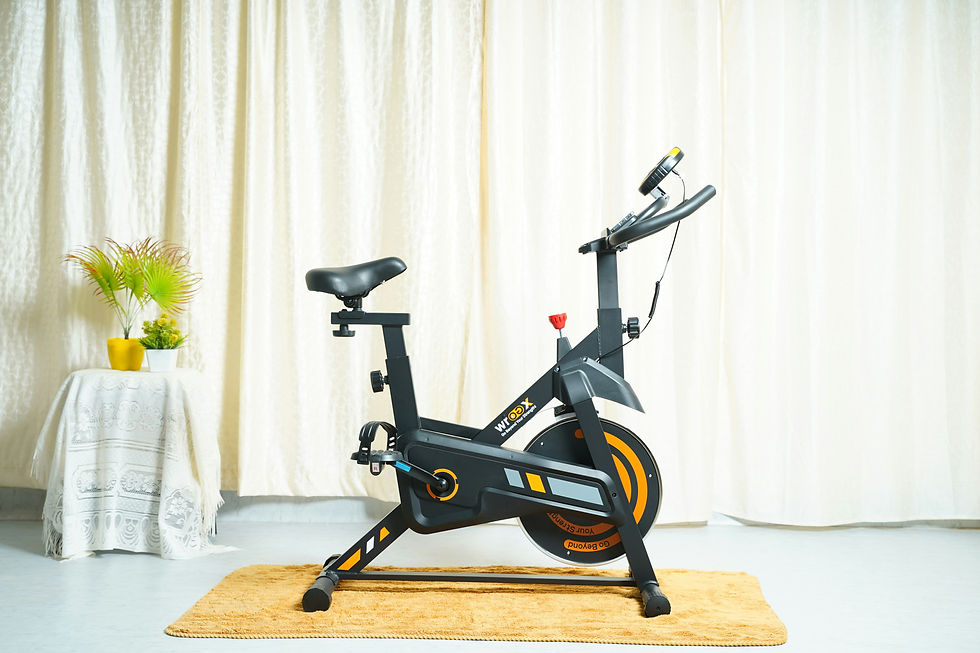
A treadmill is a wonderful bonus, especially when weather, darkness, or time make outdoor walking difficult. A stationary bike or other cardio equipment can be useful too, but none of it is required.
If you have a safe place for it, consider adding a pull-up bar and simply practice hanging. Hanging can help build grip strength and challenge the hands, forearms, shoulders, and upper body. Start with your feet supported if necessary and gradually build your time.
You are not trying to impress anyone.
You are building capability.
Stop Waiting to Feel Like It
You are not always going to feel motivated.
Some mornings you will feel tired. Some days you will be bored. Sometimes you will feel lazy. You may look at the workout and think, I really do not want to do this today.
So what?
Do it tired.
Do it lazy.
Do it bored.
Do it afraid.
Your emotions are real, but they do not have to run the schedule.
Put on your shoes before you have a committee meeting with yourself. Pick up the weights. Press play. Give it 10 minutes.
Action has a remarkable way of changing how you feel.
You begin to move.
You finish the workout.
You stand a little taller because you did what you said you would do.
Then you do it again.
Action builds results. Results build confidence. Confidence makes it easier to comply with the plan. Compliance produces more results.
Now we have momentum.
And momentum is powerful.
You begin to see yourself differently. Stronger. More capable. More resilient. More energized. You feel the satisfaction of following through. Your self-confidence grows because you have proof that you can count on yourself.
Find Something You Enjoy and Begin
There are millions of free workouts on YouTube. Search for exactly what you need: beginner strength training, dumbbell strength workout, strength and cardio, 10-minute SIT, low-impact HIIT, no-jumping HIIT, Zone 2 walking, indoor walking workout, or mobility and recovery.
Try different creators until you find someone you enjoy. You do not need the perfect program, the perfect outfit, or the perfect Monday to begin.
You just need to begin. And it will develop from there.
The more you move, the more you learn to like moving. You notice how much stronger you are. You have more energy. Your clothes fit differently. You recover faster. The weights that once felt heavy no longer do.
Eventually, you may begin to crave the very thing you once had to talk yourself into.
That is transformation.
Not one heroic workout.
Not one perfect week.
It is what you do 99% of the time that adds up.
The protein-rich meals. The vegetables and fruit. The weights. The intervals. The walks. The ordinary Tuesday when you did not feel like exercising and did it anyway.
Commitment. Compliance. Consistency. My 3C's
Train for muscle.
Eat for fat loss.
Move with intention.
Then keep it going.
You are not working toward longer, harder, more miserable workouts.
You are working toward strength. Definition. Vigor. Vitality. Confidence.
A body that can do more.
A mind that knows you follow through.
And the deeply satisfying feeling of becoming stronger, more resilient, more energized—and increasingly unstoppable.
Need more help? Need some motivation and guidance? Check out my comprehensive consultations to get your headed in a healthy direction. Get started NOW!
Comments